
Services | Custom HubSpot Integrations
Connect HubSpot to the rest of your systems
Most businesses rely on multiple systems across finance, product, operations, and marketing. When those systems are not properly connected, data becomes fragmented, processes break down, and reporting cannot be trusted. Growth London designs and implements custom integrations so HubSpot works as part of your wider system, not alongside it.
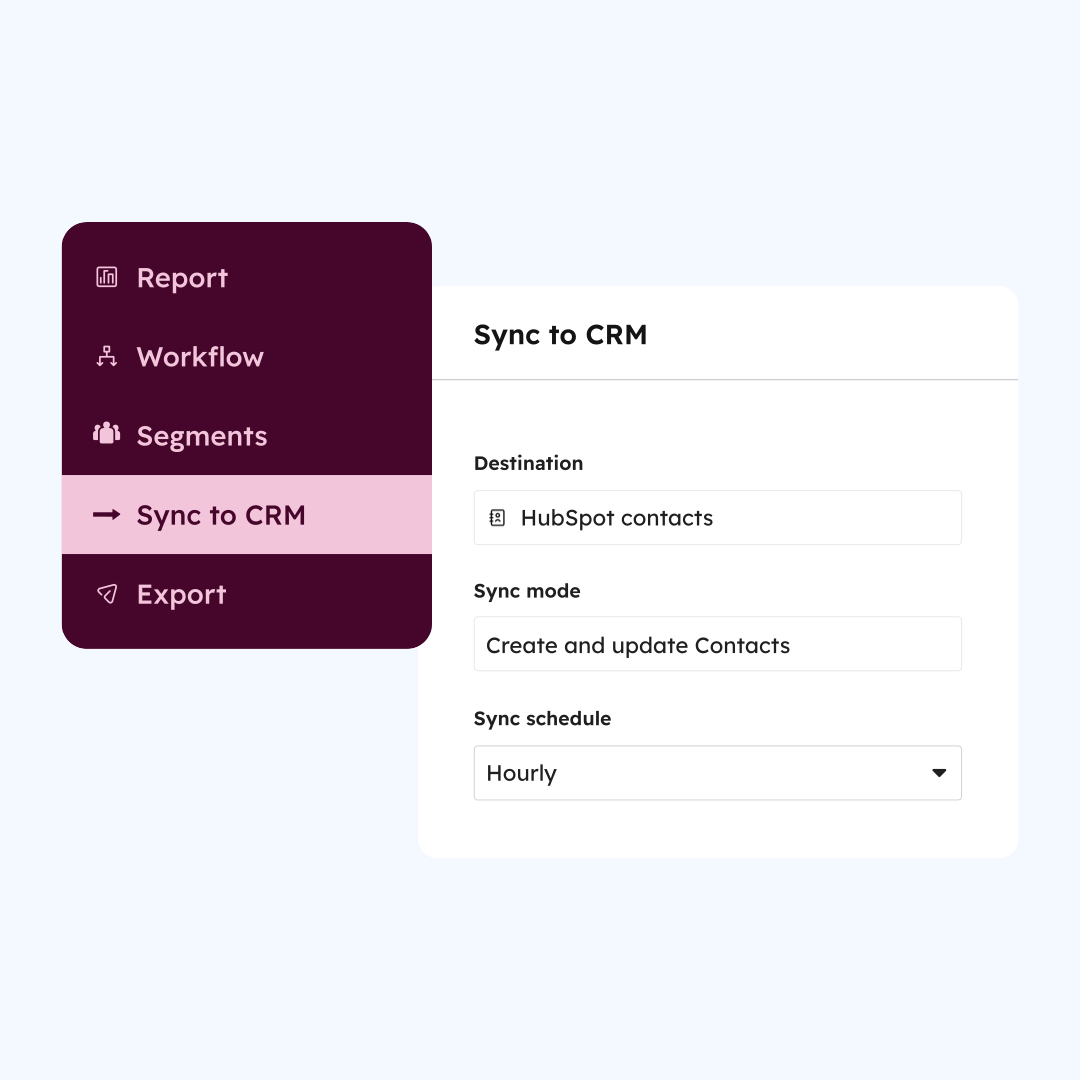
What are HubSpot integrations?
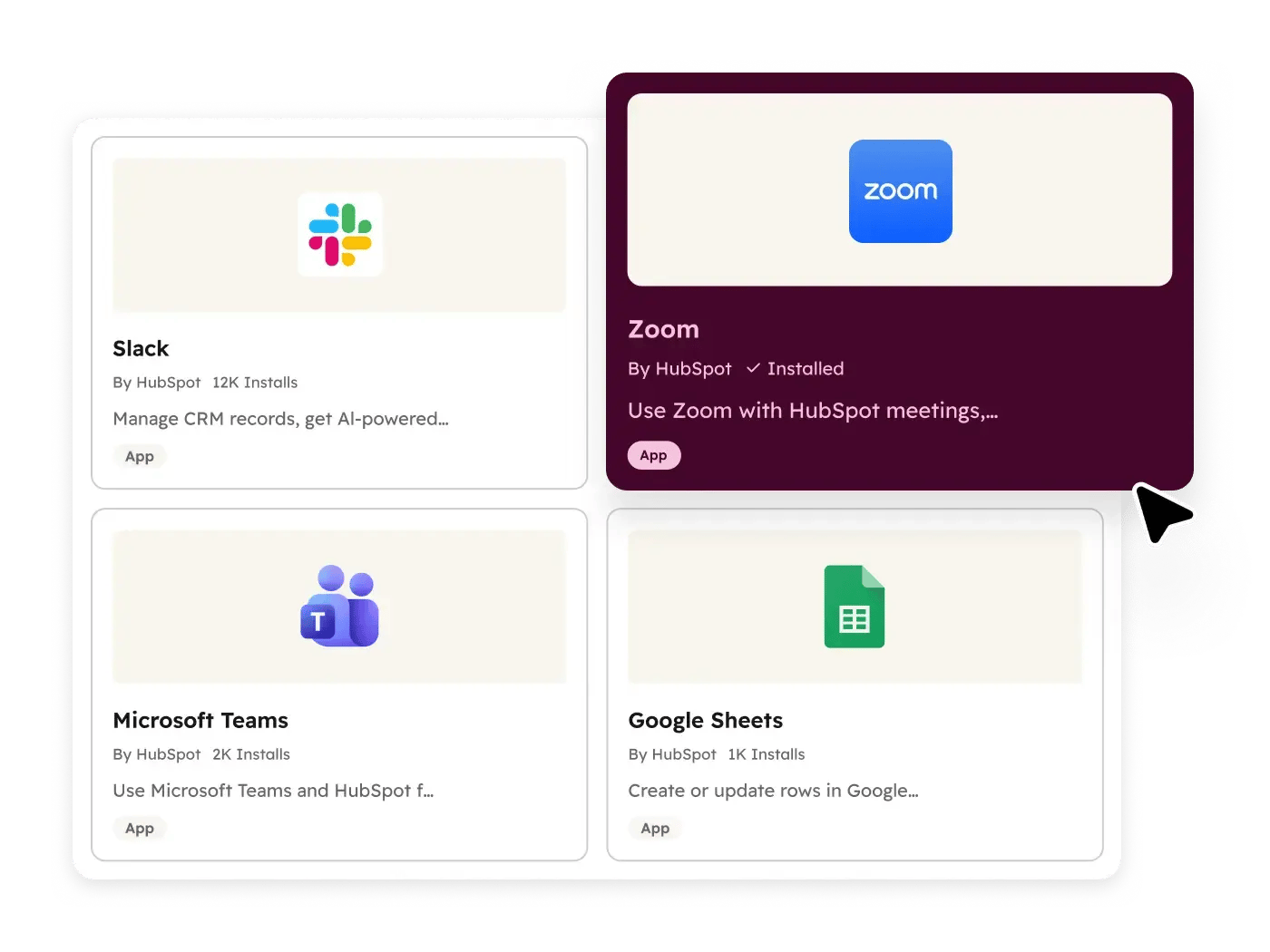
HubSpot integrations connect your CRM with other systems such as finance tools, product platforms, data sources, and internal systems.
They allow data to flow between platforms, automate processes, and ensure your teams are working from consistent, up-to-date information.
When do you need custom integrations?
When native integrations are not sufficient, or when your business requires more advanced data flows, automation, or system alignment than standard connectors can provide.
.
Types of HubSpot integrations we support
HubSpot optimisation is not about tweaking features. It’s about fixing how the system works as a whole.
Native integrations
Where possible, we configure and optimise HubSpot’s native integrations to ensure they are set up correctly and aligned with your processes.
Custom integrations
Where native options are not sufficient, we design and build custom integrations using APIs to support your specific requirements.
Data synchronisation
We ensure data flows correctly between systems, including contacts, companies, deals, financial data, and product usage.
Process automation across systems
We automate workflows that span multiple platforms, reducing manual work and improving consistency.
What a well-integrated HubSpot setup looks like
A properly integrated system allows your business to operate more efficiently and make better decisions.
Consistent data across systems
Your CRM, finance, product, and marketing systems reflect the same information.
Reduced manual work
Processes that previously required manual updates are automated.
Reliable reporting
Data from multiple systems can be combined to give a clear view of performance.
Better alignment across teams
Marketing, sales, finance, and operations work from the same data and processes.
A system that scales with your business
Your integrations are designed to handle growth without constant rework.
How HubSpot integration projects work
Initial discussion
We understand your systems, data flows, and requirements.
Scoping and planning
We define how systems should connect, what data should flow, and how processes should work.
Implementation
We configure native integrations or build custom integrations as required.
Testing and validation
We ensure data flows correctly and processes work reliably.
Ongoing optimisation
FAQ
We regularly support integrations between HubSpot and systems such as:
-
accounting and finance platforms
-
product and SaaS platforms
-
data enrichment and validation tools
-
customer support systems
-
internal databases and custom applications
Each integration requires a different approach depending on how your systems and data are structured.
Native integrations are often sufficient for standard use cases. However, if your processes, data model, or systems are more complex, a custom integration is usually required.
In most cases, yes. If a system has an API, it can typically be integrated with HubSpot.
Common integrations include finance platforms, product systems, data enrichment tools, internal databases, and third-party applications.
If HubSpot is not fully aligned with the rest of your systems, integrations are usually required.
You might be asking:
-
How do we connect HubSpot with our finance or billing system?
-
How do we sync product or usage data into HubSpot?
-
How do we ensure customer data stays consistent across systems?
-
How do we automate processes that currently require manual work?
-
How do we build reporting that combines data from multiple platforms?
-
How do we avoid data duplication or mismatches between systems?
Make HubSpot part of your system, not a separate tool
When systems are not connected, teams work harder, data becomes unreliable, and reporting breaks down. When integrations are done properly, your systems work together and your business operates more efficiently. We help you connect everything properly.